The catch in every open source Xero alternative
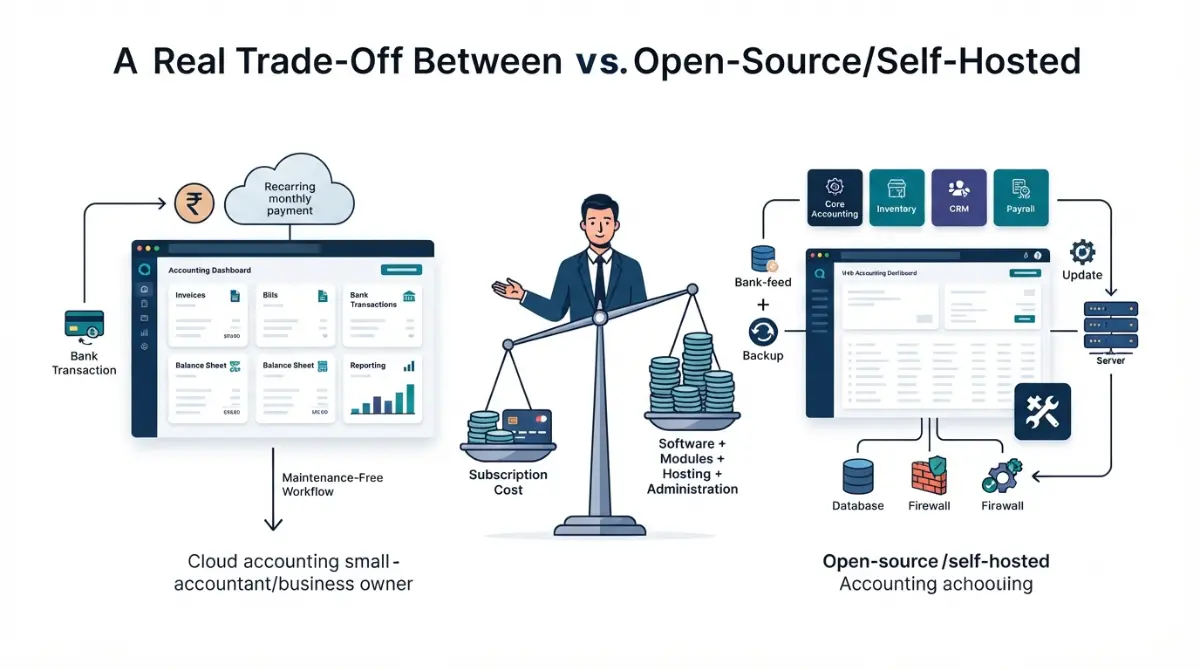
Table of Contents
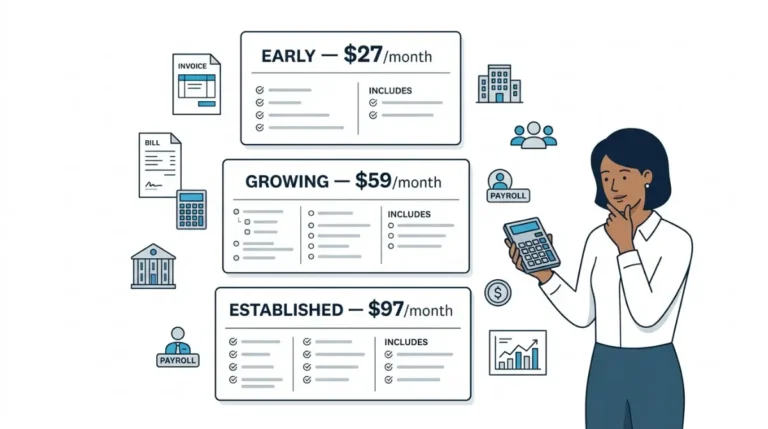
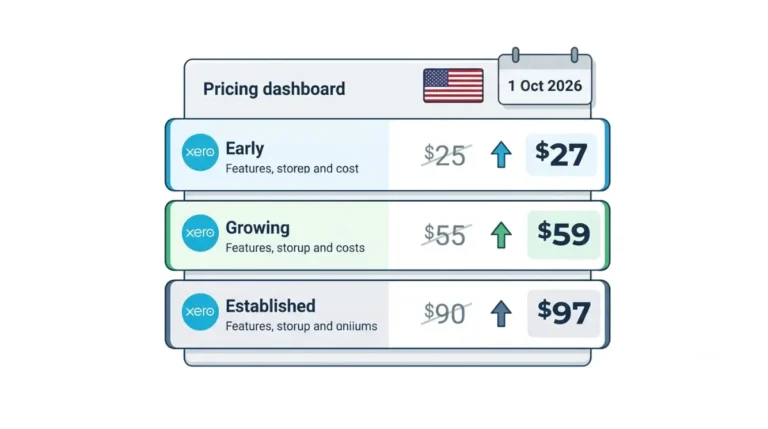
No open-source alternative replaces Xero one-for-one. Verified on xero.com on 12 September 2026: US Xero rises to $27–$97 a month on 1 October 2026. Verified on akaunting.com the same day, the free self-hosted tier allows one user, one company and 1,000 invoices, and double-entry and bank feeds are separate paid apps. You trade the bill for admin work.
The five tools people actually mean
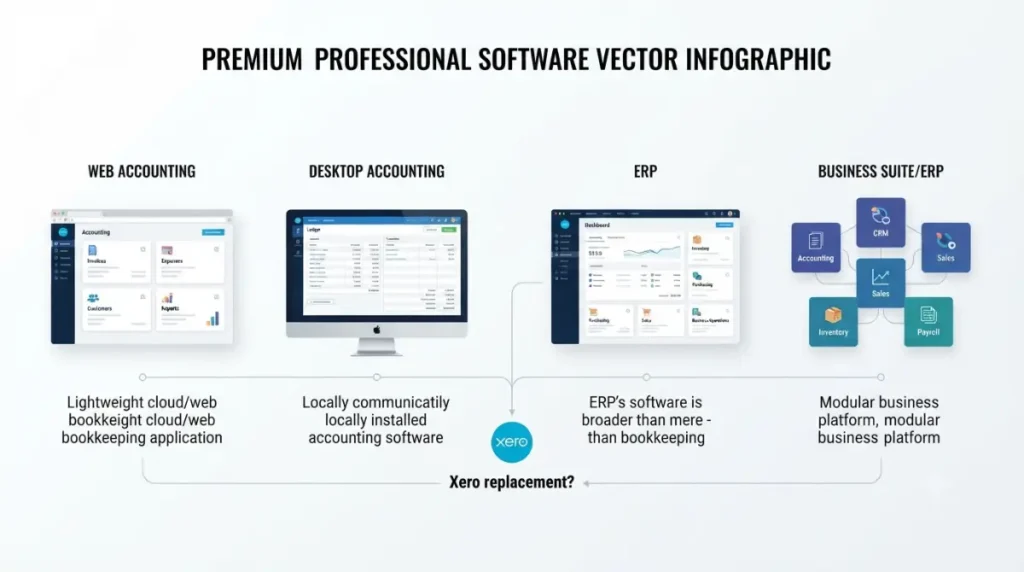
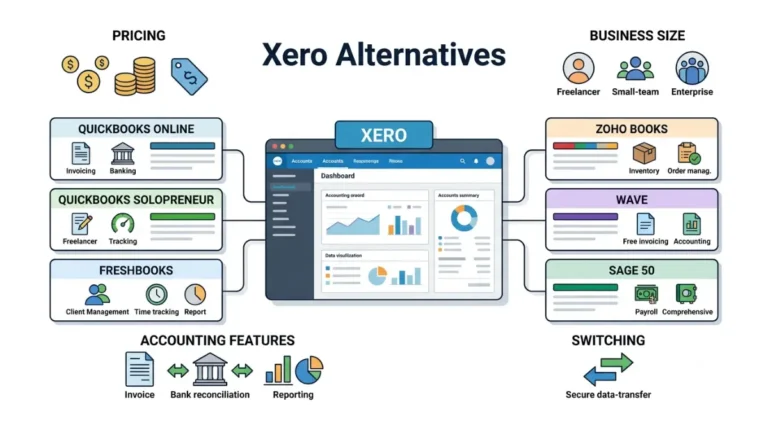
Most “open source Xero alternative” lists rank five products as if they were interchangeable. They are three different categories of software.
Akaunting
Akaunting is the closest match in shape — web-based, multi-currency, self-hostable. Its free Standard On-Premise plan covers one company, one user plus one accountant, and 1,000 invoices, per Akaunting’s self-hosted plan page, retrieved 12 September 2026.
GnuCash
GnuCash is a desktop application for one person at one machine. It is not a ledger your bookkeeper logs into from their office.
ERPNext and Odoo Community
Both are ERP systems with accounting inside them, not bookkeeping tools. Odoo ships in two editions, Community and Enterprise, and which finance features sit in which is set out on Odoo’s editions comparison.
What a free year actually costs
A one-user Akaunting install with double-entry and bank feeds costs $204 a year in modules before you buy a server — our calculation from Akaunting’s own on-premise prices, both retrieved 12 September 2026. Xero Early costs $324 a year from 1 October 2026.
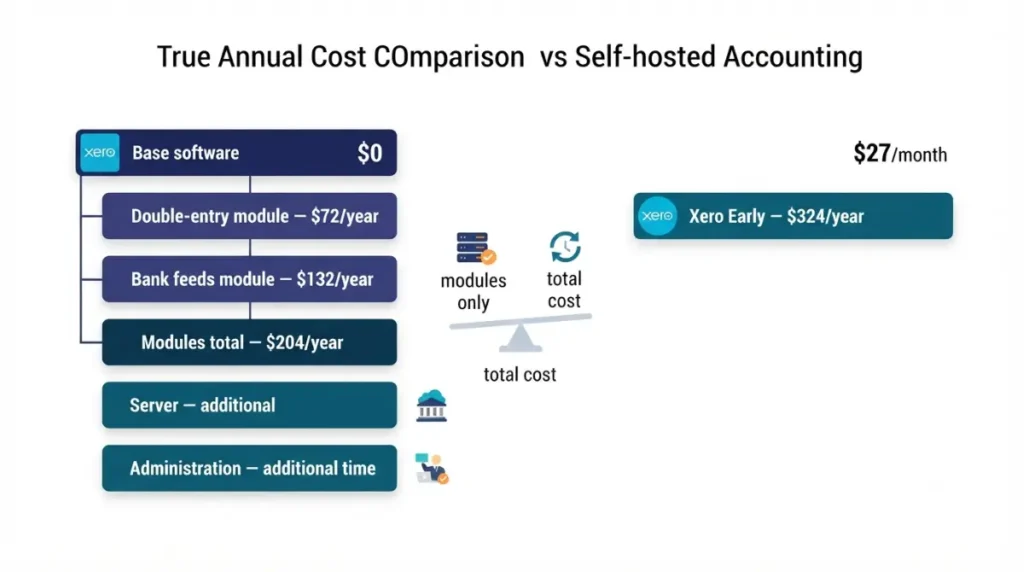
| Line item | Cost | Who hits this |
|---|---|---|
| Akaunting Standard On-Premise | $0 (verified 12 Sep 2026) | Everyone self-hosting |
| Double-Entry app, on-premise | $72/year (verified 12 Sep 2026) | Anyone needing a balance sheet |
| Bank Feeds app, on-premise | $132/year (verified 12 Sep 2026) | Anyone reconciling a bank account |
| Your server | Not priced here — see below | Everyone self-hosting |
| Modules only | $204/year | |
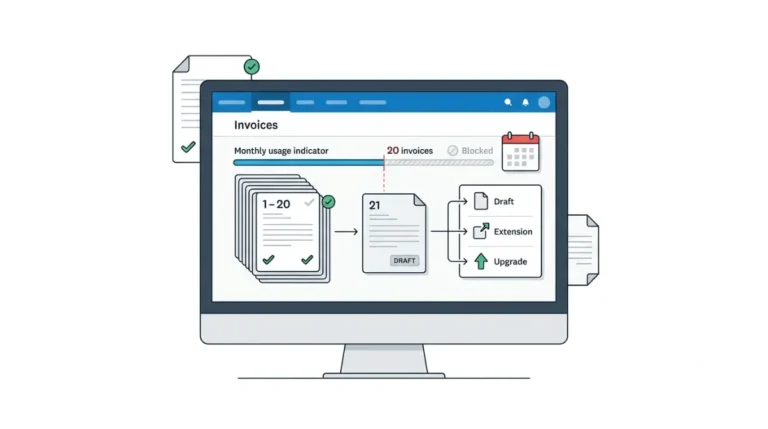
| Xero Early from 1 Oct 2026 | $324/year, at $27/mo (verified 12 Sep 2026) | Under 20 invoices a month |
🗓️ Pricing verified 12 September 2026. Software pricing changes frequently — confirm on the vendor’s site before purchasing.
We have not priced a server, because we did not open a hosting invoice we could stand behind. For managed hosting of ERPNext specifically, Frappe Cloud lists Sites from $5 a month and Servers from $40 a month, retrieved 12 September 2026.
⚠️ This Costs You: Xero’s published change notice, retrieved 12 September 2026, states the increase applies to new and existing US subscribers from 1 October 2026, and that the multi-organization discount begins to be phased out on the same date. If you run two entities on that discount, your bill moves twice. The full breakdown sits in our October 2026 Xero price change article.
The bank feed is the thing you lose first
Three different mechanisms get called a bank feed, and the difference decides how many hours a month you spend reconciling.
A feed, an aggregator and a file import
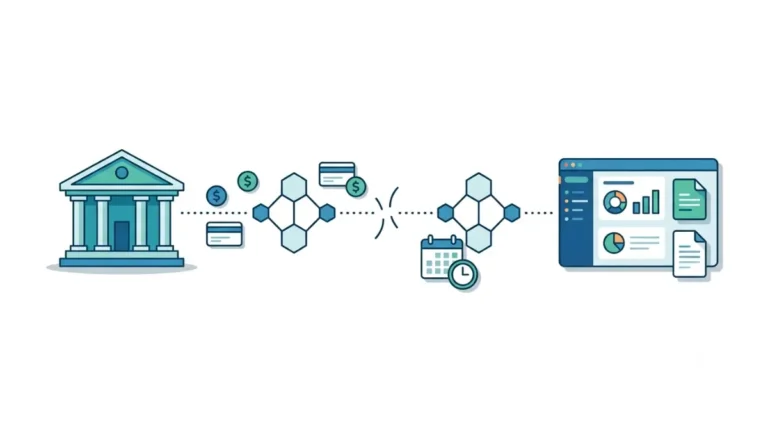
A direct feed is a bank sending transactions to your accounting provider. An aggregator connection is a third party — Plaid, GoCardless — pulling them on your behalf. A file import is you downloading a statement and uploading it.
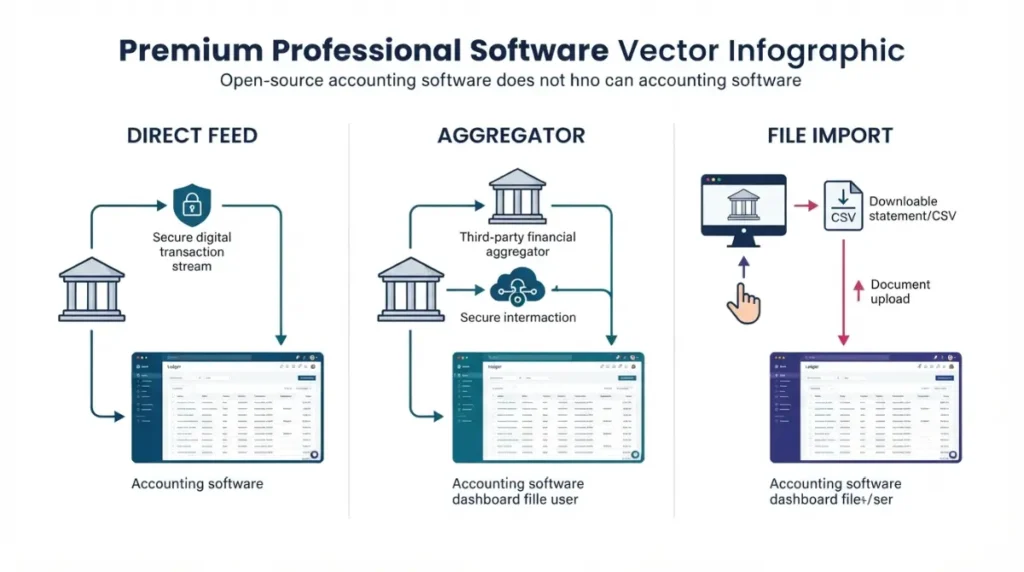
What the Akaunting app connects to
Akaunting’s Bank Feeds page, retrieved 12 September 2026, states the app works through Plaid and GoCardless and that you sign up with them and supply your own API keys. Self-hosting makes you the aggregator’s customer, with their terms, their approval process and their pricing.
🔍 Why It Works This Way: Bank data access is licensed, not open. A project can publish its source freely and still have no right to your bank’s transaction stream, so the connection gets sold separately or handed back to you.
Filing, payroll and what your accountant needs
Filing is where a free ledger stops being a free solution, because your tax authority decides what software it will accept.
VAT and the MTD problem
The GnuCash project’s own wiki states that GnuCash does not support the VAT MTD API or the corporation tax API, and that third-party filing projects exist but are not supported or endorsed by its developers. That GnuCash HMRC page was last edited 28 June 2022 and still carried that wording when we retrieved it on 12 September 2026; its £85,000 turnover figures reflect the rules of that date, not today’s.
Check your tool by name
HMRC’s own list showed 466 recognised products on 12 September 2026, and states that everything on it has passed HMRC’s recognition process. Search HMRC’s list of recognised MTD software for your chosen tool by name before you commit to it.
Payroll is separate everywhere
Xero Payroll, powered by Gusto, is an optional add-on at $36 a month plus $6 per employee or contractor, per Xero’s US pricing page retrieved 12 September 2026. Akaunting’s payroll is a separately purchased app; its plan page states plainly that no apps are included in any plan.
This is documentation, not tax advice. Your obligations depend on your jurisdiction and your accountant, and neither this page nor any software choice changes them.
Who this actually works for
Three situations, three different answers. Find yours before you spend a weekend on an install.
You are under the caps and post few transactions
One person, one company, under 1,000 invoices a year, a handful of bank lines a week. Self-hosting is viable, and a manual import is not painful at that volume.
Someone technical already runs your infrastructure
If backups, updates and uptime are already somebody’s job, the marginal cost is small. If they are not, they become yours.
Your accountant will not follow you
This is the one that ends most attempts, and no feature list mentions it. Ask your accountant which systems they work in before you migrate, not after — the free tier’s single accountant seat is worth nothing if nobody will use it.
What switching costs before you save anything
The migration is the real bill, and it lands before any saving does.
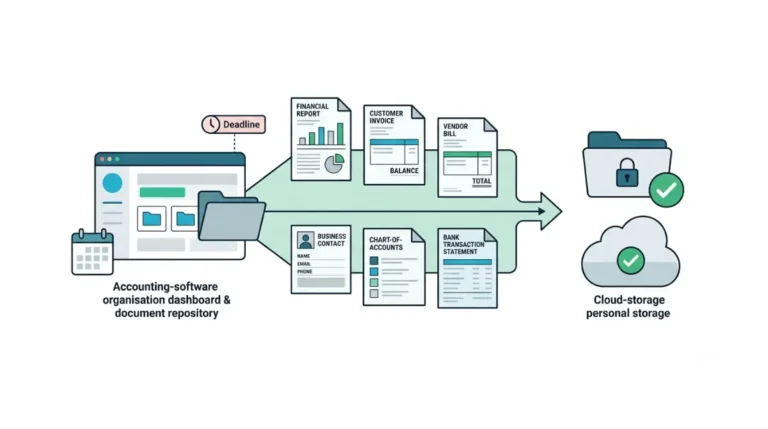
🛟 Back This Up First: Export your invoices, bills, contacts, chart of accounts and bank transactions from Xero and reconcile them against a closed period before you cut over or cancel. A subscription you cancel is not a subscription you can un-cancel, and a half-migrated ledger mid-quarter is worse than either system alone.
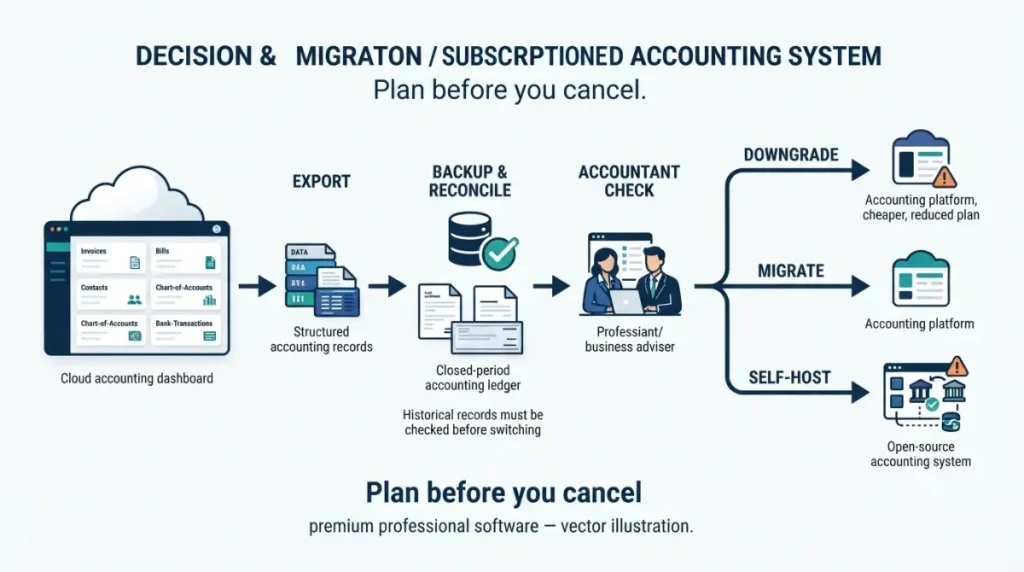
The option most people actually want
Most readers arriving here want a smaller bill, not a server. Xero’s US pricing page, retrieved 12 September 2026, states you can move to a less expensive plan one month after upgrading, and that subscriptions auto-renew monthly until cancelled.
✅ Do This: Check your invoice volume against your current tier before you shop for anything. Our Xero plan limits on invoices and bills page has the caps; what leaving Xero actually costs has the exit maths; and migration data loss covers what does not survive an export.
🧾 Not Tested: We have not installed Akaunting, GnuCash, ERPNext or Odoo Community, and we hold no paid Xero subscription. Every figure above comes from the vendor’s or regulator’s own published page on 12 September 2026, linked beside it. We cannot tell you how any of these feel to use, only what their documentation commits them to.
FAQ
1. Is Xero’s price going up?
Yes. US plans move to $27, $59 and $97 a month on 1 October 2026.
2. Is Akaunting really free?
The self-hosted Standard plan is free, capped at one company, one user plus one accountant and 1,000 invoices.
3. Does Akaunting include double-entry accounting?
No. Double-Entry is a separate app, $72 a year on-premise as verified 12 September 2026.
4. Do open source accounting tools have bank feeds?
Rarely without payment. Akaunting sells a Bank Feeds app and requires your own Plaid or GoCardless keys.
5. Can GnuCash file a VAT return?
No. Its project wiki states GnuCash does not support the VAT MTD API; unendorsed third-party tools exist.
6. Does Odoo Community include full accounting?
Odoo ships Community and Enterprise editions; check which finance features sit in each on Odoo’s editions comparison page.
7. What does it cost to self-host per year?
Akaunting modules alone total $204 a year as verified 12 September 2026, before any server cost.
8. Does Xero charge per user?
No. Payroll is the add-on that scales, at $36 a month plus $6 per person as verified 12 September 2026.
9. Is it cheaper to downgrade Xero than to switch?
Often. Xero Early is $324 a year from 1 October 2026, against $204 in modules plus a server and your hours.
The honest version
The licence is free. The year is not. Before you price a server, check your invoice volume against your current tier and ask your accountant which systems they will work in — those two answers settle it faster than any feature comparison, and neither costs anything.